Bokashicycle - Save the World
All Seasons Bokashi

All Seasons Bokashi

When you are so busy that you have only limited time to make your own bokashi powder, then you need to buy your bokashi powder. One of the best products of this type is All Seasons Bokashi. With this, you can go and do your bokashi technology without the need to wait for you to make the bokashi from the beginning.

All Seasons Bokashi

Bokashicycle Food Scrap Fermenting System - Green Micro Cyclette

The complete system includes 2 Green 3.5 gallon cyclettes. Components: Cyclcette One: * An anaerobic lock (screws on or off with one hand), * A fenestrated crib plate at the base, * A functioning spigot to drain any fluids * A pressure plate to exclude trapped oxygen * A bokashi culture mix caddy * 1 dispenser scoop * 400 grams bokashi culture mix (filling the caddy) Cyclcette Two: * An anaerobic lock (screws on or off with one hand), * A fenestrated crib plate at the base, * A functioning spigot to drain any fluids * A pressure plate to exclude trapped oxygen * 2 zip lock bags each with 400 grams of bokashi culture mix (total 800 grams) There is enough bokashi culture mix to last 2 to 3 months depending on the amount of trash fermented. Size of box is 30"w x 13" L x 13" deep. Quantity in Basket: None Price: $119.95 Shipping Weight: 15.00 pounds.

All Seasons Bokashi Bin

Bokashi bin, or some times also called bokashi bucket or composter, is a bin designed specifically for you to do your composting with bokashy technology. The bin is supplied an airtight lid to do composting in anaerobic mechanism. Bokashi composting is a technique that is done without oxygen because, not like us, the microorganisme involved in the fermentation of wastes your put into the bin, do need the oxygen. Oxygen is even toxic to some of these creatures. It means that when there is oxygen, then they are disturbed and not live happily.

Bokashicycle Yard Waste Fermenting System 55 Gallon Capacity

The yard waste fermenting system is designed to rapidly break down grass clippings, weeds, and brush placed in the 55 gallon fermenter using a combination of the bokashi culture mix and an accelerant. Woody items and branches may be included but should be shredded before being added to the fermenter. Food scraps may be added and mixed in with the yard waste. No carbon rich material is needed to mix with ordinary grass clippings or yard waste for transformation to take place. Flies, vermin, and pests will not be attracted to the fermented product subsequently mixed with soil. Successful conversion of waste to rich soil involves placing the waste material in the fermenter in layers. A cup of concentrated accelerant is diluted 3.5 fold with water and sprayed directly onto the waste. The culture mix is then dispensed broadly over the layer using the dispensing unit. Each layer is 2 – 4 inches thick. The anaerobic lid is locked in place with the band clamp to exclude oxygen and after 7 – 10 days the fermentation is complete. The fermented product is removed and mixed with ordinary soil and then covered with about 3 inches of soil. Soil microbes then in about 7 – 10 days convert waste into rich soil. If the fermented grass clippings and weeds are mixed in with a compost pile, it will also rapidly degrade and re-activate a dead compost heap. The yard waste fermenting system is made up of the following components. 55 Gallon Yard Waste Starter Kit: 1 – 55 gallon HDPE Fermenter 1 – Band clamp 1 - Lid with locking flange and seal to exclude oxygen when the fermenter is closed 1 – Filter cassette for fluid removal 1 – Safety pressure release valve – spigot 1 – Key for opening spigot safety pressure valve 1 – 25 pound bag of bokashi culture mix 1 – 1 gallon concentrate of accelerant for yard waste processing 1 – 1 liter spray bottle for priming yard waste before adding culture mix 1 – Instruction set for yard waste processing 1 – Bokashi mix dispensing unit There is enough culture mix and concentrated accelerant provided in the starter kit to process approximately 550 gallons (~ 3 cubic yards) of hard packed yard waste. The Yard Waste Fermenting kit ships by FedEx anywhere in the US and measures 22 inches in diameter. It stands 36 inches in height.

Let it Rot!: The Gardener's Guide to Composting (Third Edition) (Storey's Down-to-Earth Guides

A readable, quietly humorous introduction to composting, this covers reasons to compost; differing approaches; how decomposition works; various methods, ingredients, and containers; how to speed decomposition; and how to use the end result. Campbell is an experienced gardener, and the book goes into great detail, but the text remains clear and interesting. The simple black-and-white illustrations vary between decorative sketches and straightforward diagrams; they could have been more frequent and more informative. The bibliography lists 14 other books on composting; a list of sources of composting supplies is also given. An interesting treatment of a basic subject for general readers, this is recommended for all gardening collections needing material on compost heaps..

Composting For Dummies

Back-to-basics gardening that will benefit the earth and your wallet! Want to use ordinary waste to create an extraordinary garden? Composting lets you turn household food waste, yard clippings, and more into free compost and mulch that's chock-full of nutrients. From building and working with traditional compost bins to starting an indoor worm-composting operation, Composting For Dummies makes these often intimidating projects easy, fun, and accessible for anyone!

The Bokashi Bucket Compost System

Organic Nutrient Rich Fertilizer in just two weeks. Compost your food waste to make valuable garden fertilizer. The Bokashi Bucket inoculates food waste in an airtight bucket with a dried material know as EM-1 Bokashi. The EM-Bokashi will ferment the food waste, preventing it from rotting, and therefore eliminate the odor or the attraction to flies. After the food waste is pickled, you can add it to an existing compost pile, feed it to worms, or bury it in an existing garden bed.

Showing posts with label Bokashi. Show all posts

Tuesday, October 5, 2010

All Seasons Bokashi Bin

Share |
Posted On 9:30 AM by Inkpower 0 comments

Bokashi bin, or some times also called bokashi bucket or composter, is a bin designed specifically for you to do your composting with bokashy technology. The bin is supplied an airtight lid to do composting in anaerobic mechanism. Bokashi composting is a technique that is done without oxygen because, not like us, the microorganisme involved in the fermentation of wastes your put into the bin, do need the oxygen. Oxygen is even toxic to some of these creatures. It means that when there is oxygen, then they are disturbed and not live happily.

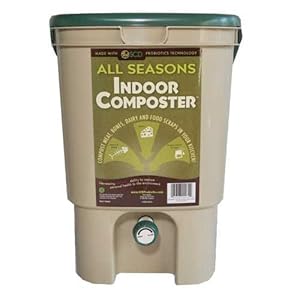
An example of composting bin that you can you use for bokashi composting in the kitchen is here. It is marketed with a name of All Seasons Indoor Composter. It comes with a beautiful tan color.

The is a unique indoor composter that will recycle your kitchen waste into an organic compost soil conditioner. This bin uses the most effective method of fermenting--anaerobic (without oxygen) fermentation. This process prepares the scraps for burial in less than half the time of conventional composting methods without any unpleasant odors. This indoor composter includes two unique features, a strainer and spigot, allowing the moisture released by the scraps of food waste to be drained out to prevent spoilage. This concentrated liquid can be used as a fertilizer or to clean your kitchen and bathroom drains once diluted. Used in conjunction with All Seasons Bokashi (sold seperately), the system provides the ideal conditions to activate anaerobic fermentation that accelerates the composting process, while eliminating odors and deterring flies.

You can get this bokashi composter bin from here.


Bokashi videos

Share |
Posted On 9:08 AM by Inkpower 0 comments

Bokashi composting is a simple technology that you can apply yourself at home. It is also a cheap technology with very valuable product. It does not need anything else except the bokashi bran that you can purchase from local market or online and your kitchen wastes. That is all you need to compost your kitchen waste with bokashi technology.

If you have no idea at all about bokashi composting, here are some video you can start with. Watch them to get an insight how people have successfully done bokashi composting.

Bokashi FAQ - Video 1


Bokashi FAQ - Video 2


Bokashi - What you need to know


Monday, October 4, 2010

All Seasons Bokashi

Share |
Posted On 11:25 PM by Inkpower 0 comments

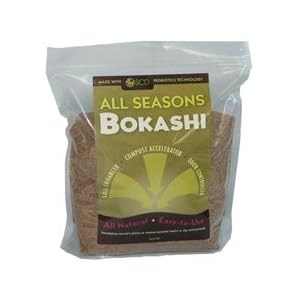
When you are so busy that you have only limited time to make your own bokashi powder, then you need to buy your bokashi powder. One of the best products of this type is All Seasons Bokashi. With this, you can go and do your bokashi technology without the need to wait for you to make the bokashi from the beginning.

Grow your garden with the All Seasons Bokashi. Bokashi has traditionally been used by Japanese farmers as a soil amendment to increase the nutrient level and microbial diversity of the soil. This bokaski can be used as a compost starter, fermentation starter, soil conditioner and/or beneficial microbial inoculate. This bokashi is made by fermenting wheat bran with molasses and Probiotics. When you use bokashi to maintain high populations of beneficial and efficient microbes in the soil, they will
  • Promote germination, flowering, fruiting and ripening in plants Improve physical, chemical and biological environments in the soil and help to eliminate soil-borne pathogens and pests;
  • Enhance the photosynthetic capacity of plants and ensure better germination and plant establishment;
  • Increase the effectiveness of organic materials as fertilizers;
  • Eliminate putrefactive soil that stresses plants
All Seasons Bokashi is available from here


Straw based Bokashi

Share |
Posted On 7:42 AM by Inkpower 1 comments

Bokashi can be made from all organic materials. If you are living near paddy rice fields, then you must have plenty of rice straw available. This by-product in rice plantation can actually turned into bokashi, thereby increasing the value of the by-product. In fact, straw from gramineae plantation can also be used in place of rice straw.

Rice straw based bokashi is very popular in rice producing countries. This technology has helped to solve the problem of rice straw on rice fields. Straw produced after rice harvest is one of major problems faced by farmers because it needs to be removed from the field in preparation for the next planting season. Often times, the straw is simple burned by farmers which results in loss of organic matter and creates environmental problem. Using the straw in bokashi making does not only help in straw removal, but also creates a valuable product for economic and environmental benefits.

Here is how to make a straw-based bokashi.

Materials needed:
  1. Rice straw (10 kg). Other straws can also be used as an alternative, including ground nut straw and field grasses. This material should be chopped into lengths of 5-10 cm.
  2. Rice bran (0.5 kg) and rice husk (10 kg)
  3. EM4 (10 ml or about 2 full spoons)
  4. Molasses or sugar (10 ml about 2 full spoons)
  5. Water as required
Procedure:
  1. Make a solution containing 10 ml EM4 : 10 ml molasses or sugar : 1,000 ml water. Warm water is the best for rapid dissolution of EM4.
  2. Mix the rice straw, rice bran, and rice husk on a clean concrete floor. Make sure to mix them thoroughly.
  3. Pour the EM solution, slowly and with a well mix, over the organic material (mix of rice straw, rice bran, and rice husk). When you do it well, you will a get a product with a moist contents of about 30%. Test this by taking a handfull of the materials and you should get a well formed materials without excess water. On touching, however, the material will be back to crumble. That is a good sign of mixing between the EM solution and the solid materials.
  4. Lay down the bokashi on a clean concrete floor with a height of 15-20 cm and cover it with a gunny bag or anyhthing that permits oxygen exchange between under the cover and the environment. Temperature under the cover should be about 40-50 degree celcius (please check this with a thermometer). If it reaches more than 50 degrees, remove the cover and do mixing on the materials. This is to disperse the heat. Put the cover back again.
  5. After 4 gays, bokashi making should have been completed. Longer times may be need for temperate regions during winter.
The bokashi should be used soon after being made. That is for a maximum result. But, if you need to store it, place the bokashi on a clean concrete floor under a shade and let to dry (no direct sunlight). Prevent it from rain.


      How to make bokashi in a open environment (aerobic)

      Share |
      Posted On 5:06 AM by Inkpower 0 comments

      Bokashi making is a quite simple technology to apply.  You can have a choice whether to make it using a closed system (anaerobic) or an open system (aerobic). In an aerobic system, you make the bokashi without oxygen involvement, while on the other hand, you need the oxygen in aerobically processed bokashi.

      Here is how to make bokashi in an aerobic environment.

      Materials needed:
      1. Rice bran (100 litres)
      2. Oil cakes (25 litres)
      3. Fish meal (25 litres)
      4. EM1 (150 ml)
      5. Molasses (150 ml)
      6. Water (15 litres)
      If you do not have molasses around or you have to buy it from somewhere with lots of cost, then you can replace the molasses with any type of sugar. Some other materials you can use include raw cane sugar, juice of any fruits and waste water of alcohol industrie. The principle here is to provide the microorganisms in EM with readily available energy source for the to initate their tasks.

      Water quantity indicated above is for guide only. You may need less or more water, but please provide it in unlimited quantity meaning that there is always water available when needed. Guideline here is to produce a bokashi with a moist content of about 30-40 persen (moist enough, but no water excess).

      Preparation:
      1. Mix rice bran, oil cake and fish meal thoroughly;
      2. Dissolve molasses in water (1:100). Use warm water to help the process.
      3. Add EM into the molasses solution
      4. Pour the EM mixture onto the already mixed organic materials. Please do this gradually to make sure a good mixing between the solution and the organic materials. Please check the mositure contents that there is drainage of excess water. The moisture level of the materials is about 30-40% and you can check this practically by squeezing a handful. Once sequeezed, it should remain as a single unit without crumbling, but the materials should scrumble when touched. That is the best condition you are after.
      5. Place the mixed material on a clean concrete floor and cover it with a gunny bag, straw mat, or similar material. Be careful not be wet by rain.
      Time required to complete the fermentation is dependent on local climate. In summer of temperate region or in tropical regions, it requires more than 3-4 days. In winter, more than 7-8 days are required for a complete fermentation.

      The best result of bokashi application is soon after being made. If you want to store it for later use, spread the bokashi on clean concrete floor under a shade as a way to dry it and then placed in a vinyl bag.


      Sunday, October 3, 2010

      How to make bokashi with no oxygen (anaerobic)

      Share |
      Posted On 10:41 PM by Inkpower 0 comments

      Bokashi making technology has developed around the word and creativity has been with it in which different materials have been tested and used in bokashi making. The best about this technology is that it can be developed using organic materials available locally, so it is applicable in all situations and localities. As long as there are organic materials available, then there you can make bokashi.

      Principally, bokashi can be made either without oxygen (anaerbic) or with oxygen (aerobic). The following a recipe on how to make the bokashi using the anaerobic system.

      Materials needed:
      1. Rice bran (100 litres)
      2. Oil cakes (25 litres)
      3. Fish meal (25 litres)
      4. EM1 (150 ml)
      5. Molasses (150 ml)
      6. Water (15 litres)
      If you do not have molasses around or you have to buy it from somewhere with lots of cost, then you can replace the molasses with any type of sugar. Some other materials you can use include raw cane sugar, juice of any fruits and waste water of alcohol industrie. The principle here is to provide the microorganisms in EM with readily available energy source for the to initate their tasks.

      Water quantity indicated above is for guide only. You may need less or more water, but please provide it in unlimited quantity meaning that there is always water available when needed. Guideline here is to produce a bokashi with a moist content of about 30-40 persen (moist enough, but no water excess).

      Preparation:
      1. Mix rice bran, oil cake and fish meal thoroughly;
      2. Dissolve molasses in water (1:100). Use warm water to help the process.
      3. Add EM into the molasses solution
      4. Pour the EM mixture onto the already mixed organic materials. Please do this gradually to make sure a good mixing between the solution and the organic materials. Please check the mositure contents that there is drainage of excess water. The moisture level of the materials is about 30-40% and you can check this practically by squeezing a handful. Once sequeezed, it should remain as a single unit without crumbling, but the materials should scrumble when touched. That is the best condition you are after.
      5. Place the mixture into an airtight bag (such polyethylene bag) and then place this into another bag to make sure an aerobic condition achieved during the process. Close the bag tightly and place it in a dark room, away from sunlight.
      Time required to complete the fermentation is dependent on local climate. In summer of temperate region or in tropical regions, it requires about 3-4 days. In winter, 7-8 days are required for a complete fermentation.

      At the end of the day open the bag and inspect the smell of the bokashi. It should be with a sweet smell. If it is sour and rotten in smell, you are not successful. Anaerobically prepared bokashi should be used soon after preparation. If you want to store it for later use, spread the bokashi on clean concrete floor under a shade as a way to dry it and then placed in a vinyl bag.